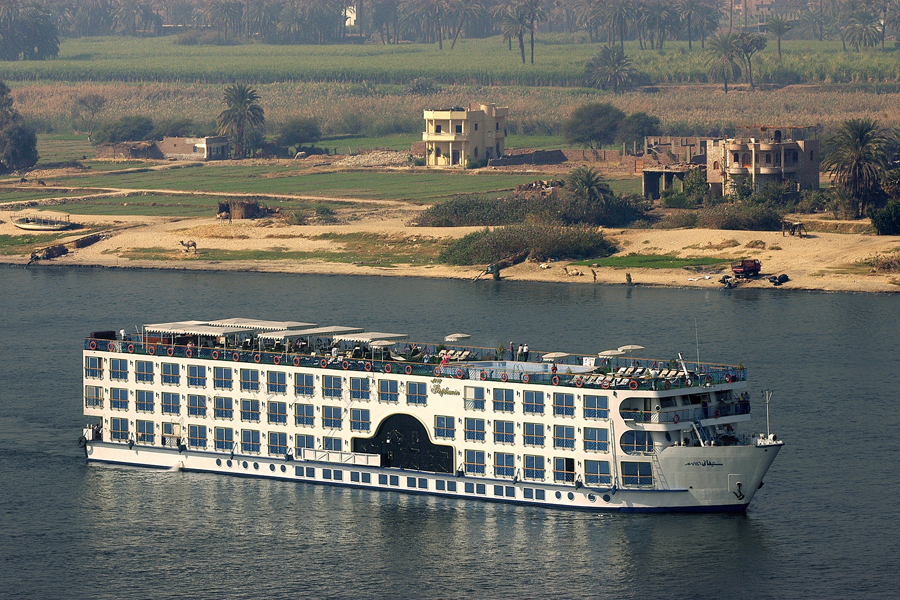
There are few travel experiences that match the serenity and spectacle of drifting down the longest river in the world. A Nile cruise offers a blend of relaxation and historical discovery that is difficult to replicate elsewhere. You are essentially floating through an open-air museum, witnessing thousands of years of heritage from the comfort of your cabin. This guide explores why this journey remains a top choice for travellers and what you can anticipate during your voyage through the cradle of civilisation.
The Lifeblood of an Empire
Nile cruises were the backbone of ancient Egyptian civilization, providing water, fertile soil, and a crucial transportation route that helped the empire thrive for millennia. Temples and tombs were built along its banks to honor the gods and pharaohs who controlled the annual floods. Traveling this waterway today lets you follow the paths of ancient royalty and witness monuments that have endured for centuries. Exploring this connection between the river and its people adds depth to every site you visit.
Choosing Your Vessel
How you choose to travel the Nile will significantly shape your experience. There are several options, each offering a different style of journey.
Large luxury cruisers are the most common choice, functioning like floating hotels with swimming pools, restaurants, and nightly entertainment. They provide a comfortable, structured way to see the sights at a steady pace.
For a slower, more traditional approach, consider a Dahabiya. These are two-masted sailing boats that offer a quieter, more intimate atmosphere for fewer passengers. Their smaller size also allows them to access places larger ships cannot.
If you prefer adventure over luxury, a Felucca provides a rustic experience. These simple sailboats rely on wind power and often involve sleeping on deck under the stars, offering an authentic connection to the river.
Sites You Cannot Miss
Most itineraries focus on the route between Luxor and Aswan, rich with archaeological wonders. In Luxor, often called the world’s greatest open-air museum, you’ll explore the vast Karnak Temple Complex and Luxor Temple. Across the river on the West Bank lies the Valley of the Kings, where pharaohs like Tutankhamun were buried in elaborate tombs.
Further south, the well-preserved Temple of Edfu honors the falcon god Horus, while Kom Ombo features a unique double temple dedicated to Sobek and Horus. The journey concludes in Aswan, home to the stunning Philae Temple, moved stone by stone to an island to protect it from rising waters. Each stop reveals a fascinating piece of history.
Life on the Water
Life on board settles into a relaxing rhythm that contrasts sharply with the bustling cities of Cairo or Alexandria. Days usually start with an early breakfast followed by shore excursions to visit temples before the midday heat peaks. Afternoons are generally spent sailing, allowing you to watch rural Egyptian life unfold along the riverbanks. You might see farmers tending to their fields, water buffalo cooling off in the shallows, or children playing near the reeds.
Evenings often feature dinners showcasing local cuisine and entertainment such as Nubian music or dance performances. The service on most vessels is attentive, aiming to make your stay as comfortable as possible. The viewing deck becomes a prime location at sunset, where the changing colours of the desert dunes create a stunning backdrop to your journey.
Practical Planning Tips
Timing is key for a successful trip. The best time to visit is October to April when temperatures are cooler, as summer can be extremely hot and physically challenging for site visits. Pack light, breathable clothing and comfortable shoes for uneven temple grounds, and always bring sun protection.
Carry small denominations of Egyptian currency for customary tipping (drivers, guides, boat staff). Book in advance, especially for peak holidays like Christmas or Easter, and check visa requirements for your nationality to avoid border delays.
A Voyage Through Time
A Nile cruise is more than a holiday; it is an immersion into history. You gain a perspective on Egypt that land-based travel simply cannot provide. Whether you choose a luxury liner or a traditional sailboat, the experience of watching the sun set over the dunes while floating down this legendary river creates lasting memories. It remains the most effective way to understand the scale and grandeur of ancient Egypt while enjoying modern comforts.